Exploring the Enigma of Lucid Gravity: A Journey Beyond Conventional Physics
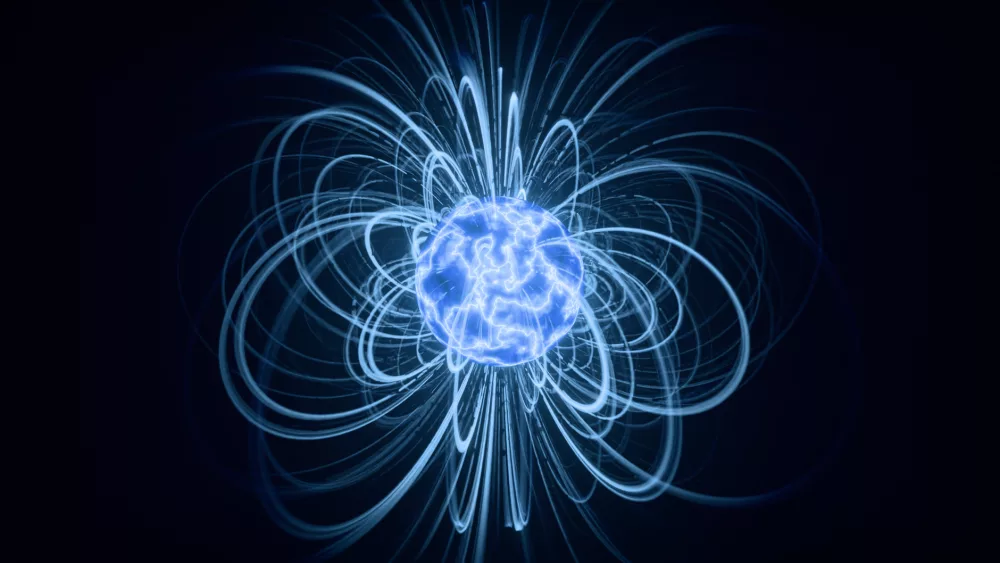
I've spent a significant portion of my career immersed in the intricate world of theoretical physics, often contemplating concepts that push the very boundaries of our understanding. Among these, the notion of 'Lucid Gravity' has consistently captivated my attention. It's a hypothesis that, while highly speculative, forces us to question the fundamental nature of gravity itself, suggesting it might not be the immutable, unyielding force we've always perceived it to be. This isn't just about small tweaks to existing models; we're talking about a paradigm shift that could redefine our interaction with the cosmos.
Unpacking the Core Concept of Lucid Gravity
When I first encountered the term, I admit, my immediate thought was about the conscious manipulation of gravity – a very sci-fi idea. However, the theoretical underpinnings of Lucid Gravity are more nuanced, proposing an inherent 'plasticity' or malleability within gravitational fields. Instead of merely being a geometric distortion of spacetime, as described by Einstein's General Relativity, Lucid Gravity posits that there might be an underlying, perhaps quantum, mechanism that allows for localized and even deliberate modulation of gravitational interactions.
Think about it this way: General Relativity beautifully describes *how* mass and energy curve spacetime, which we experience as gravity. It’s an incredibly successful model, predicting everything from planetary orbits to the expansion of the universe. But what if there's another layer? What if we could influence that curvature directly, not just by adding more mass, but by subtle field interactions or through previously unknown quantum phenomena? This is where Lucid Gravity begins to diverge, suggesting a profound level of control might someday be attainable. It’s a bold step to say the least.
"Imagine a future where gravitational fields aren't merely fixed attributes of mass, but dynamic mediums we can subtly 'tune' or 'sculpt' with advanced technology. That's the provocative whisper of Lucid Gravity."
How Might This Even Work? The Speculative Mechanisms
The really tricky part, and where the theory gets incredibly complex, is explaining *how* this manipulation would occur. There aren't any definitive answers, of course, but theorists have floated several ideas I've found interesting:
- Localized Quantum Field Interactions: Perhaps by precisely manipulating quantum fields at a very small scale, we could induce temporary, localized gravitational gradients. This might involve exotic matter states or even manipulating the vacuum energy in a controlled way.
- Subtle Spacetime Resonance: There's a thought that if spacetime has an intrinsic 'frequency' or 'vibration,' perhaps we could resonate with it, much like tuning a radio. If we could tap into this, we might be able to amplify or diminish gravitational effects in a given region.
- Interdimensional or Higher-Dimensional Influence: Some theories entertain the possibility that gravity's true nature lies in dimensions beyond our perception. If we could access or influence these hidden dimensions, we might gain leverage over the gravitational force in our observable 3D space. It's quite the leap, I'll grant you.
It's important to remember, these are highly theoretical constructs. We're talking about ideas that are currently beyond our experimental capabilities and largely exist within the realm of mathematical models and thought experiments. There's no empirical evidence, not yet anyway.
The Potential, Mind-Bending Implications
Despite its speculative nature, the implications of even partially harnessing Lucid Gravity are genuinely astounding. It’s hard not to get a little excited about the possibilities, you know?
- Revolutionizing Space Travel: If we could manipulate gravity, conventional propulsion systems could become obsolete. Imagine generating a localized gravitational field that propels a spacecraft, or even creating a 'warp bubble' that bends spacetime around a vessel for faster-than-light travel without violating relativistic principles. The energy savings, the reduction in travel time – it's transformative.
- Unlimited Clean Energy: If gravity can be 'tuned,' could we potentially extract energy from its fluctuations or from localized gravitational wells? This could open doors to a form of energy generation that is truly boundless and clean, shifting our entire energy paradigm.
- Advanced Material Science: We might be able to create materials with unheard-of properties, perhaps materials that are gravitationally repulsive, or that can withstand immense gravitational stress. This could lead to new forms of construction, armor, or even everyday items.
- Terraforming and Planetary Engineering: On a grander scale, the ability to modify gravitational fields could aid in terraforming distant planets, adjusting their atmospheric retention or even their rotational dynamics.
I mean, these aren't small ideas. They're universe-altering concepts, if proven feasible.
The Immense Hurdles and My Reservations
Now, let's get real for a moment. While the potential is exhilarating, the practical challenges facing Lucid Gravity are absolutely monumental. As a physicist, I can't help but acknowledge these roadblocks.
Experimental Verification: A Giga-Challenge
Our current instruments, while incredibly sensitive, are designed to *detect* existing gravitational phenomena, not to *manipulate* them. We're only just beginning to detect gravitational waves, tiny ripples in spacetime. To actively control gravity would require technology and an understanding of physics far beyond our present grasp. It would require experiments on a scale we can barely comprehend, and with precision that currently seems impossible. We just don't have the tools.
Energy Requirements: A Quantum Leap
General Relativity tells us that spacetime is incredibly stiff. To significantly bend or warp it takes an immense amount of mass-energy. If Lucid Gravity seeks to achieve similar effects through non-mass-based means, the energy input would still likely be colossal.
Where would this energy come from? The theoretical frameworks often bypass this detail, but it’s a critical practical consideration. Harvesting energy on such a scale is a problem in itself.
Reconciliation with Established Physics
Any theory that proposes to manipulate gravity on a fundamental level must, at some point, reconcile with General Relativity and quantum mechanics. Currently, these two pillars of modern physics are famously difficult to unify. Lucid Gravity would either need to emerge from a grand unified theory or offer a compelling new framework that gracefully subsumes both. That’s not a small task; it’s the holy grail of modern physics.
Frankly, the idea challenges the very fabric of our understanding, and that’s a tough sell without a mountain of empirical data.
My Concluding Thoughts on This Fascinating Hypothesis
So, where does that leave us with Lucid Gravity? I view it as a compelling thought experiment, a brilliant theoretical exercise that pushes the boundaries of our imagination. It might be centuries, even millennia, before we can truly ascertain its validity, or perhaps it will remain forever in the realm of science fiction.
However, the pursuit of such audacious ideas is precisely what drives scientific progress. Even if Lucid Gravity itself proves to be unattainable, the questions it raises, the alternative physical models it forces us to consider, could very well lead to unexpected breakthroughs. It compels us to look beyond the immediate, to think about the universe in new ways. And for me, that's incredibly exciting. It reminds us that our understanding of reality is always evolving, always incomplete, and there's always more to discover.
About Editorial Team
Senior columnist and culture critic specializing in architectural designs, emerging high-growth systems, and contemporary philosophies.